
Evidence Review · The Journal
Foot Massage for Plantar Fasciitis — What Helps and What Doesn't
Heel pain is common, slow to shift, and surrounded by bad advice. Here's the careful version: what massage can reasonably do for a sore heel, where the evidence runs thin, and when you should be seeing a clinician instead of booking with us.
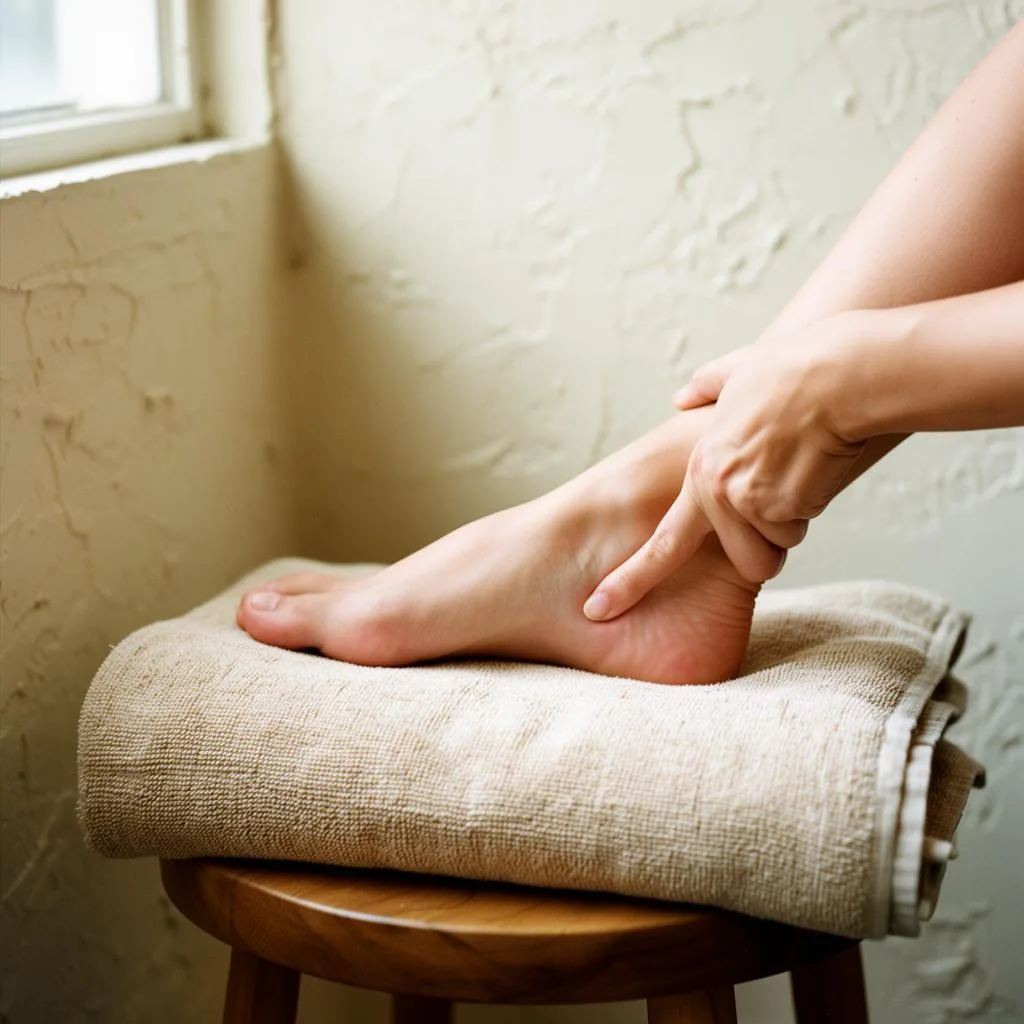
A foot massage for plantar fasciitis at U Beauty & Foot Spa runs 45 minutes for $50 or 60 minutes for $55, and here's the honest version of what it does: it can loosen the calf, arch and heel tissue sitting around an irritated plantar fascia, which often takes the edge off for a while. It isn't a treatment for the condition. We're a massage studio, not a medical office — we don't diagnose anything and we won't tell you we can fix your heel. What follows is what the research seems to support, where it's thin, and when you should call a podiatrist instead of us.
What plantar fasciitis actually is
The plantar fascia is a thick band of connective tissue running from the heel bone forward to the base of the toes. Picture a bowstring holding up the arch. Every step loads it. Every step down off a Manhattan curb loads it a little harder than a step on grass would.
Plantar fasciitis is what people call it when the tissue near that heel attachment becomes irritated and starts to break down. The pattern is specific enough that most people recognize themselves in it immediately: a sharp, stabbing pain in the first few steps out of bed, easing after a few minutes of walking, then coming back later in the day once you've been upright for hours. Sitting through a long meeting and standing up does a smaller version of the same thing.
One detail changes what any massage can reasonably claim. Clinicians now tend to describe the tissue change as degenerative rather than simply inflamed — closer to a fraying rope than a swollen joint. That's part of why rest and an anti-inflammatory so often disappoint, and why the things that seem to move the needle are the slow ones: loading the tissue gradually, stretching the calf, changing footwear, and letting weeks pass.
The triggers are dull and familiar. Long shifts standing on hard floors. A sudden jump in walking or running mileage. Flat, worn-through shoes. Calves that have been tight for years. If your feet simply ache from covering ground rather than hurting at one point in the heel, our guide to tired feet after walking NYC is the more useful read.
What the research supports
The short answer: hands-on soft-tissue work combined with a stretching program has more behind it than massage on its own, and none of the evidence is strong. Studies in this corner of the literature are small, short, and hard to line up against each other. Anyone selling you certainty about heel pain is selling something.
Cross-friction and soft-tissue work
The technique studied for heel pain isn't a spa foot massage. It's targeted: cross-friction across the fascia near its attachment, sustained pressure through the arch, and release work on the calf — particularly the gastrocnemius and soleus, which pull on the heel from above. Those trials almost always pair the hands-on work with stretching the patient does at home, which makes it genuinely hard to say how much credit belongs to the hands.
The National Center for Complementary and Integrative Health, part of the National Institutes of Health, is deliberately careful about this across pain conditions in general: massage therapy may help with some kinds of pain, but much of the research is preliminary, the studies are small, and the benefits that do appear are often short-lived. Their review of complementary approaches for chronic pain reads the same way. We'd rather quote a hedge than oversell an hour in a chair.
Why reflexology's claims are weaker here
What we do is Chinese-style foot reflexology — a hot herbal soak first, then thumb and knuckle pressure through the sole, arch, heel and calf. The traditional theory says a zone on the sole corresponds to an organ elsewhere in the body. That map isn't supported by good evidence, and we're not going to pretend it is. It doesn't need to be true for the hour to be worth having.
Drop the chart and what's left is the part that's actually relevant to a sore heel: firm, sustained mechanical pressure on the plantar surface, real time on the calf, warmth, and forty-five minutes of not being on your feet. That's a modest, believable set of effects. We take the same line in our guide to reflexology vs foot massage.
A deep enough foot massage breaks up the scar tissue and clears plantar fasciitis for good.
Pressure doesn't dissolve fascia, and no session "clears" this condition. NCCIH describes the evidence for massage in pain conditions as limited and preliminary. What a session realistically buys you is reduced calf and arch tension, some short-term comfort, and a genuinely pleasant hour. The recovery itself comes from weeks of loading, stretching and better shoes, and — for a heel that won't settle — a clinician.
“We can make the hour feel better. We can't make the diagnosis, and we won't pretend the evidence is stronger than it is.”
What heel pain feels like day to day
In a Midtown week it shows up on a schedule. The first thirty seconds after the alarm, hobbling to the kitchen. The walk from the 6 train at 51st in dress shoes with no arch left in them. Standing through a long afternoon on a trading floor or a retail floor, then the slow, careful first block afterward. By evening, most people describe it less as sharp and more as a deep, hot bruise under the heel.
That daily shape changes how we run the session. We'll ask where exactly it hurts and whether the pain is worse in the morning or at night, then spend most of the time on the calf and the arch rather than drilling into the tender point. Some days the heel wants no direct contact at all, and that's a completely fine session. If you're coming straight from the office and want it fitted around a workday, that's the same window we describe in our guide to massage after work — and a walk-in massage in Midtown East at 7 PM is a normal Tuesday here.
How long and how often
For heel pain, 45 minutes or 60 minutes is a better bet than 30. A half hour is mostly soak and soles; it barely reaches the calf, and the calf is where a lot of the tension pulling on your heel lives. The longer sessions leave room to work the gastrocnemius and soleus properly, then come back down to the arch and approach the sore area slowly rather than going straight at it.
| Session | What there's time for | Who it suits |
|---|---|---|
| 45 minutes · $50 | Soak, full sole and arch work, plus real time on both calves | Most first visits when the heel is the complaint |
| 60 minutes · $55 | All of the above, slower, with room to work around a tender heel | A weekly or fortnightly routine while things settle |
| 90 minutes · $80 | Feet, calves, and the hips and lower back that start compensating | A heavy standing week, or a training block that went too far too fast |
| 30 minutes · $35 | Soak and soles — a top-up, not a full session | Between longer visits, or a quick reset before a train |
- What there's time for
- Soak, full sole and arch work, plus real time on both calves
- Who it suits
- Most first visits when the heel is the complaint
- What there's time for
- All of the above, slower, with room to work around a tender heel
- Who it suits
- A weekly or fortnightly routine while things settle
- What there's time for
- Feet, calves, and the hips and lower back that start compensating
- Who it suits
- A heavy standing week, or a training block that went too far too fast
- What there's time for
- Soak and soles — a top-up, not a full session
- Who it suits
- Between longer visits, or a quick reset before a train
Frequency is where we'd rather admit ignorance than invent a protocol. There's no good data on an optimal schedule for this. What people tend to do here is come weekly for three or four weeks, notice whether mornings are any easier, then stretch the interval out. If nothing has shifted after that, more massage isn't the missing piece — a podiatrist is. Our full massage prices are published if you want to plan a month of it.
What to do between sessions
Most of what helps heel pain happens on the other six days. None of the following is a prescription — it's the general, widely repeated advice you'll also hear from clinicians, and your own should have the final word on your feet.
-
Warm it before you load it
Those first steps out of bed are the worst of the day for a reason — the tissue has been shortened and still overnight. Gentle calf and arch movement before your feet hit the floor is a common suggestion, and it costs nothing to try. -
Stretch the calf, most days
Calf tightness pulls on the heel from above, so calf stretching is the single most commonly recommended piece of self-care for plantar fasciitis. A wall stretch with the back leg straight, then again with it slightly bent, is the standard pair. Consistency matters far more than intensity. -
Look at your shoes before anything else
How old are they, how flat have they gone, and how many miles of pavement do they see a week? Worn-out flats and unsupportive dress shoes come up constantly. Whether you need an insert, a different last, or something custom is a question for a podiatrist, not for us. -
Change the load, not just the tissue
A jump in mileage often shows up a week or two before the heel does. If you've recently added distance, added standing hours, or started walking a new commute, easing the ramp is usually more useful than any hands-on work. -
Measure in weeks
This condition moves slowly. Judging progress day to day will make you miserable and will push you toward whatever promises a fast fix. Compare this Monday morning to the Monday three weeks ago instead.
If you want individualized guidance on orthotics, taping, night splints, physical therapy or injections, that's a clinician's call, not ours. We'll happily work alongside a plan someone qualified has given you.
When to see a clinician instead of us
Some heel pain isn't plantar fasciitis, and some of it needs a real assessment before anyone puts hands on it. We don't image, diagnose or prescribe, and there are days when the right answer to a walk-in is a referral rather than a session.
On credentials: New York State licenses massage therapists through the New York State Education Department's Office of the Professions, under the title LMT. Ask us about the credentials of the therapist working on you — it's a fair question and nobody here minds it. The American Massage Therapy Association frames massage as a contributor to general health and wellness rather than a cure for named conditions, and that's the framing we use as well: this belongs alongside medical care, not in place of it.
Booking a targeted foot session
There's no separate "plantar fasciitis treatment" on our menu, because that would be a medical claim we can't make. What there is: a foot massage of the length you choose, with a therapist who'll adapt to a sore heel if you tell them about it when you sit down. Say the words plantar fasciitis, point at the spot, and name your pressure. That's the whole briefing.
Foot Massage
Chinese-style foot reflexology in a reclining chair — a hot herbal soak first, then thumb and knuckle pressure through the sole, arch, heel and calf. The single best thing you can do for feet that have walked Manhattan all day.
- 30 mins Foot Massage · 30 min $35
- 45 mins Foot Massage · 45 min $50
- 60 mins Foot Massage · 60 min $55
- 90 mins Foot Massage · 90 min $80
Prices in USD. Same rate every day, including evenings and Sunday.
If your back and shoulders have been compensating for a limp — and after a few weeks of heel pain they usually have — the 30 mins foot massage plus 30 mins back massage at $60 covers both in one visit. You can compare it against everything else on the best foot massage in Midtown East page, which lays our rates next to what the rest of the neighborhood charges.
What the same hour costs elsewhere in Midtown
Read off each studio's own menu or its booking-marketplace listing in August 2026. Only genuine 60-minute foot or reflexology sessions are in the table — deep-tissue clinics sell a different hour and are not comparable on price.
| Studio | Where | Published rate | For |
|---|---|---|---|
| U Beauty & Foot Spa (us) | 146 East 55th Street | $55 | 60 min |
| Union Spa NYC | 211 E 43rd St | $145 | 60 min |
| Siya Healing Spa | 56 W 39th St | $140 | 60 min |
| Luxsa Thai Spa | 274 Madison Ave | $140 | 60 min |
- Where
- 146 East 55th Street
- Published rate
- $55
- For
- 60 min
- Where
- 211 E 43rd St
- Published rate
- $145
- For
- 60 min
- Where
- 56 W 39th St
- Published rate
- $140
- For
- 60 min
- Where
- 274 Madison Ave
- Published rate
- $140
- For
- 60 min
That is a spread of $140–$145 against our $55, and the gap is not a promotion — it's the standing price, seven days a week, 9:30 AM to 9:30 PM.
Where we are, and when we're open
U Beauty & Foot Spa is at 146 East 55th Street, 2nd Floor, Suite 2B, New York, NY 10022 (Between Lexington Ave. & 3rd Ave.), in Midtown East. The 51 St station on the 6 is a two-minute walk, Lexington Av/53 St on the E and M is three, and Grand Central Terminal is about ten minutes straight down Lexington. We're open every day from 9:30 AM to 9:30 PM, walk-ins included, and there's no evening surcharge — the same point we make on our massage open late in Midtown page. Full directions and hours are on the contact page, and you can book online or call (212) 347-7878.