
Evidence Review · The Journal
Hot Stone Massage in NYC — benefits, prices and what to expect
Heated basalt, seventy minutes and a full foot massage, for less than most Midtown spas charge for an hour of anything. Here's what the heat does, what it doesn't, who shouldn't have it, and exactly what happens once you're on the table.
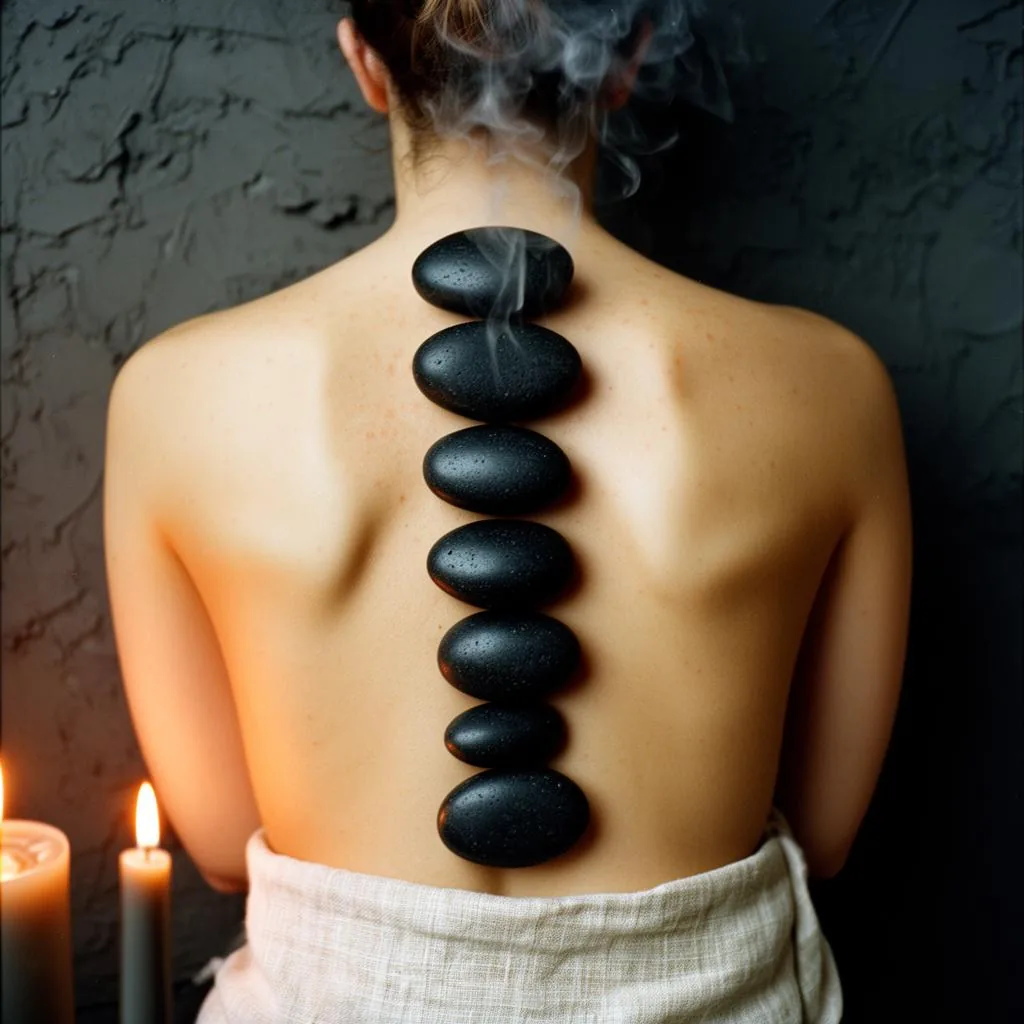
A hot stone massage at U Beauty & Foot Spa runs 70 minutes and costs $110 — heated basalt worked over the back and shoulders, paired with a full foot massage in the same session — and it's the same $110 if the two of you take the couples room together. Midtown spas routinely charge two or three times that for a stone session, which is the main reason this page exists. The other reason is that heat is genuinely useful for some people and a bad idea for others, and almost nobody explains which is which before you're already face-down.
What hot stone massage is
Smooth basalt stones are heated in water, then used two ways: some are laid along the back, in the palms or between the toes and left to sit, while others are held by the therapist and used as an extension of the hand — long gliding strokes along the spinal muscles, the shoulders, the backs of the legs. Basalt is the stone of choice because it's volcanic, dense and non-porous, so it holds heat for a long time and releases it slowly.
Our version isn't a stones-only session. It's 70 minutes that combines the stone work with a proper foot massage, which is our house specialty and the thing most people come here for in the first place. If you've never had reflexology and want to know what the foot half involves, our guide to reflexology vs foot massage covers it.
What the heat actually does
Short version: heat makes tissue easier to work with, and the session is deeply relaxing. Those two claims are reasonable. Most of the bigger claims made for hot stone in spa marketing are not, and we'd rather say so on the way in than have you feel misled on the way out.
Heat, muscle tension and the guarding reflex
Applied warmth increases blood flow to the skin and superficial tissue, and it tends to reduce the protective guarding that makes a tight back tighten further the moment someone presses on it. The practical effect on a table is easy to notice: a therapist can reach a useful depth without pushing nearly as hard, because the muscle isn't fighting them. That's why people who find deep tissue too intense often get on much better with stones.
On the evidence itself, the National Center for Complementary and Integrative Health, part of the National Institutes of Health, is measured: massage therapy may help with some types of pain and may improve quality of life, but a lot of the research is preliminary and the studies are small. Hot stone specifically has far less research behind it than general massage does. We're describing something that feels excellent and has plausible short-term effects, not a therapy with a thick file of trials behind it.
Relaxation and the stress response
This is the part with the most support, and it's also the part most people actually book for. Deliberate relaxation practices are recognized by mainstream medicine as useful for stress — the Mayo Clinic describes relaxation techniques as a reasonable, low-risk part of managing it, and NCCIH's overview of complementary approaches for stress takes a similar view of mind-and-body practices generally, while noting the limits of the research. Seventy minutes of warmth, dim light and no phone is a fairly efficient way to get there.
People often report sleeping better the night of a session. Take that as an observation rather than a claim: the evidence on massage for sleep is thin and mostly preliminary. It's still one of the reasons our last bookings of the evening are popular, and why we keep the room quiet after 8 PM.
What hot stone is not
It isn't a detox, it doesn't flush toxins, and it won't realign anything. It's not a treatment for an injury, and it shouldn't replace care from a doctor or physical therapist for a specific problem. The American Massage Therapy Association positions massage as a contributor to general health and wellness, and that's the honest ceiling for what a stone session can promise.
Hot stones draw toxins out of the muscles and flush them from the body.
There's no mechanism for that, and no serious source describes massage as a detoxification method. What heat does is raise local blood flow and take the edge off muscle guarding. That's a smaller claim, it's a believable one, and it's still worth 70 minutes of your evening.
Our 70 minute session, step by step
You keep your own pace throughout. Nothing here happens without you knowing it's coming, and every stage can be adjusted or skipped.
-
Arrival and a quick conversation
Two flights up to Suite 2B, shoes off, a couple of questions: pressure preference, anything sore, anything to avoid, any medical condition we should know about. Thirty seconds of honesty here changes the whole session. -
The hot herbal soak
Feet go into a warm herbal soak first. It softens the skin, warms the tissue and, more practically, marks the moment your evening stops being a work evening. -
Foot and lower-leg work
Thumb and knuckle pressure through the sole, arch, heel and calf — the same reflexology work as our standard foot massage, just folded into a longer appointment. -
Stones placed, then moved
On the table, warm stones are set along the back and left to sit while the therapist works around them. Then the stones come into the hands and are used for long gliding strokes over the back, shoulders and legs. Each one is temperature-checked before it touches you. -
Shoulders, neck and the last ten minutes
The tail of the session usually goes to the neck and shoulder line — the desk muscles — with lighter, slower work as the heat fades. -
Getting up slowly
Sit for a minute before standing. Water helps. Most people are noticeably slower on the way out than they were on the way in, which is the point.
“Heat isn't a treatment. It's a very effective way to get a guarded back to stop bracing for an hour and a bit.”
Hot stone vs deep tissue
Both run 70 minutes here and they sit 20 dollars apart, so the choice is about what you want done rather than what you want to spend. The rough rule: stones if you're tense and tired, deep tissue if you have a specific knot you want somebody to argue with.
| Hot stone | Deep tissue with essential oil | |
|---|---|---|
| Price | $110 | $130 |
| Pressure | Moderate, carried by heat | Firm, sustained, sometimes uncomfortable |
| Best for | General tension, cold weather, stress, poor sleep | A specific tight area that hasn't shifted |
| Includes feet | Yes — full foot massage is part of the session | Full body work with essential oil |
| Next-day soreness | Uncommon | Fairly common for a day |
| Good first massage | Yes | Only if you already know you like firm pressure |
- Hot stone
- $110
- Deep tissue with essential oil
- $130
- Hot stone
- Moderate, carried by heat
- Deep tissue with essential oil
- Firm, sustained, sometimes uncomfortable
- Hot stone
- General tension, cold weather, stress, poor sleep
- Deep tissue with essential oil
- A specific tight area that hasn't shifted
- Hot stone
- Yes — full foot massage is part of the session
- Deep tissue with essential oil
- Full body work with essential oil
- Hot stone
- Uncommon
- Deep tissue with essential oil
- Fairly common for a day
- Hot stone
- Yes
- Deep tissue with essential oil
- Only if you already know you like firm pressure
If your feet are the actual complaint and the rest is fine, neither of these is the efficient answer — a plain 60-minute foot massage at $55 does more for less. The best foot massage in Midtown East page compares those rates against the rest of the neighborhood, and heel pain in particular gets its own treatment in our guide to foot massage for plantar fasciitis.
Who should skip it
Heat changes the risk profile of a massage, and a few conditions make stones a bad idea even when regular massage would be fine. The common thread is simple: if you can't reliably feel heat, or your circulation or bleeding risk is altered, warm stones are not the session for you.
What it costs in Midtown East
Every price is published, which is more than most of the neighborhood manages. There's no evening surcharge, no weekend rate and no membership.
Solo — $110 for 70 minutes
One person, one session: 70mins foot massage and hot stone, $110. For comparison, published 60-minute reflexology rates at nearby Midtown spas run $140–$145, and stone sessions typically sit above that. Our full massage prices are listed in one table if you want to see the whole menu at once.
Couples — $110 in the couples room
The same session, two people, side by side in a single room. ZZ Day Spa publishes $259–$319 for 50–80 min and Bangkok Fortune starts at $300 for the hour, so this is the sharpest price on our menu relative to the market. It's the same room used for the couples back massage & essential package at $240 and the couples deep tissue at $130; there's more detail on the couples massage in Midtown East page. Book ahead — one reservation fits at a time.
Hot stone at U Beauty & Foot Spa
Seventy minutes of heated basalt work with a full foot massage included, solo or side by side. Book online, call, or walk in and ask.
- 70mins Foot massage and hot stone · 70 min $110
- Couples · 70mins Foot massage and hot stone · 70 min $110
- 70mins Full body Deep tissue with Essential oil · 70 min $130
Prices in USD, same every day including evenings and Sunday. Couples sessions need a reservation.
What the neighbourhood charges for a comparable hour
Nobody nearby publishes a stone rate, so the closest honest comparison is the 60-minute foot or reflexology hour — read off each studio's own menu or marketplace listing in August 2026.
| Studio | Where | Published rate | For |
|---|---|---|---|
| U Beauty & Foot Spa (us) | 146 East 55th Street | $55 | 60 min |
| Union Spa NYC | 211 E 43rd St | $145 | 60 min |
| Siya Healing Spa | 56 W 39th St | $140 | 60 min |
| Luxsa Thai Spa | 274 Madison Ave | $140 | 60 min |
- Where
- 146 East 55th Street
- Published rate
- $55
- For
- 60 min
- Where
- 211 E 43rd St
- Published rate
- $145
- For
- 60 min
- Where
- 56 W 39th St
- Published rate
- $140
- For
- 60 min
- Where
- 274 Madison Ave
- Published rate
- $140
- For
- 60 min
Against a $140–$145 market for plain foot work, our $110 buys 70 minutes with the stones included. There is no evening surcharge and no weekend rate.
Best season for it in New York
Stone bookings cluster from November through March, and the reason isn't mysterious. You walk four blocks in a wind tunnel off the East River, ride an overheated 6 train, then sit under an office vent for nine hours. Shoulders end up somewhere near the ears by February. Radiator-dry apartments don't help either. Heat is the obvious antidote and the sessions feel twice as good when it's twenty-eight degrees outside.
Summer is the quieter half of the year for stones, though July has its own case: Midtown offices run cold enough that plenty of people are stiff in August for exactly the same reason they're stiff in January. Nothing about the session changes seasonally. If the idea of heat sounds unappealing in a heatwave, the plain 60-minute foot massage is the better July booking, and the after-work window is covered in our guide to massage after work.
Booking, hours and how to find us
We're at 146 East 55th Street, 2nd Floor, Suite 2B, New York, NY 10022 (Between Lexington Ave. & 3rd Ave.), in Midtown East. The 51 St station on the 6 train is a two-minute walk, Lexington Av/53 St on the E and M is three, and Grand Central Terminal is about ten minutes down Lexington. Open every day from 9:30 AM to 9:30 PM — including Sunday — with walk-ins welcome, which is the subject of our massage open late in Midtown Manhattan page. A 70-minute session needs to start by 8:20 PM at the latest, so call (212) 347-7878 or book online if you're aiming for the end of the evening. Directions, hours and the map are on the contact page.
One last note on evening sessions: if you're booking hot stone hoping it'll help you sleep, the research on massage and sleep is preliminary, and NCCIH's own review of complementary approaches for sleep disorders is cautious about it. Plenty of our guests say it works for them. We just won't put that in a headline.